

Introduction: Finding Your Next Laugh in Local News
Have you ever read a local news story and thought, "Wait, did that really happen?" You are not alone. Local news outlets like valley news dispatch often cover events so strange, awkward, or oddly timed that they rival professional comedy. And here’s the thing: that is not a bug. It is a feature.
Science backs this up. A study from the University of Pennsylvania found that news delivered with humor activated more brain regions than straight news ^1. Another study showed that satirical news actually increased learning compared to regular reporting ^2. So when you chuckle at a bizarre city council meeting or a confused police blotter entry, you are not just being silly. You are processing information in a way that helps it stick.
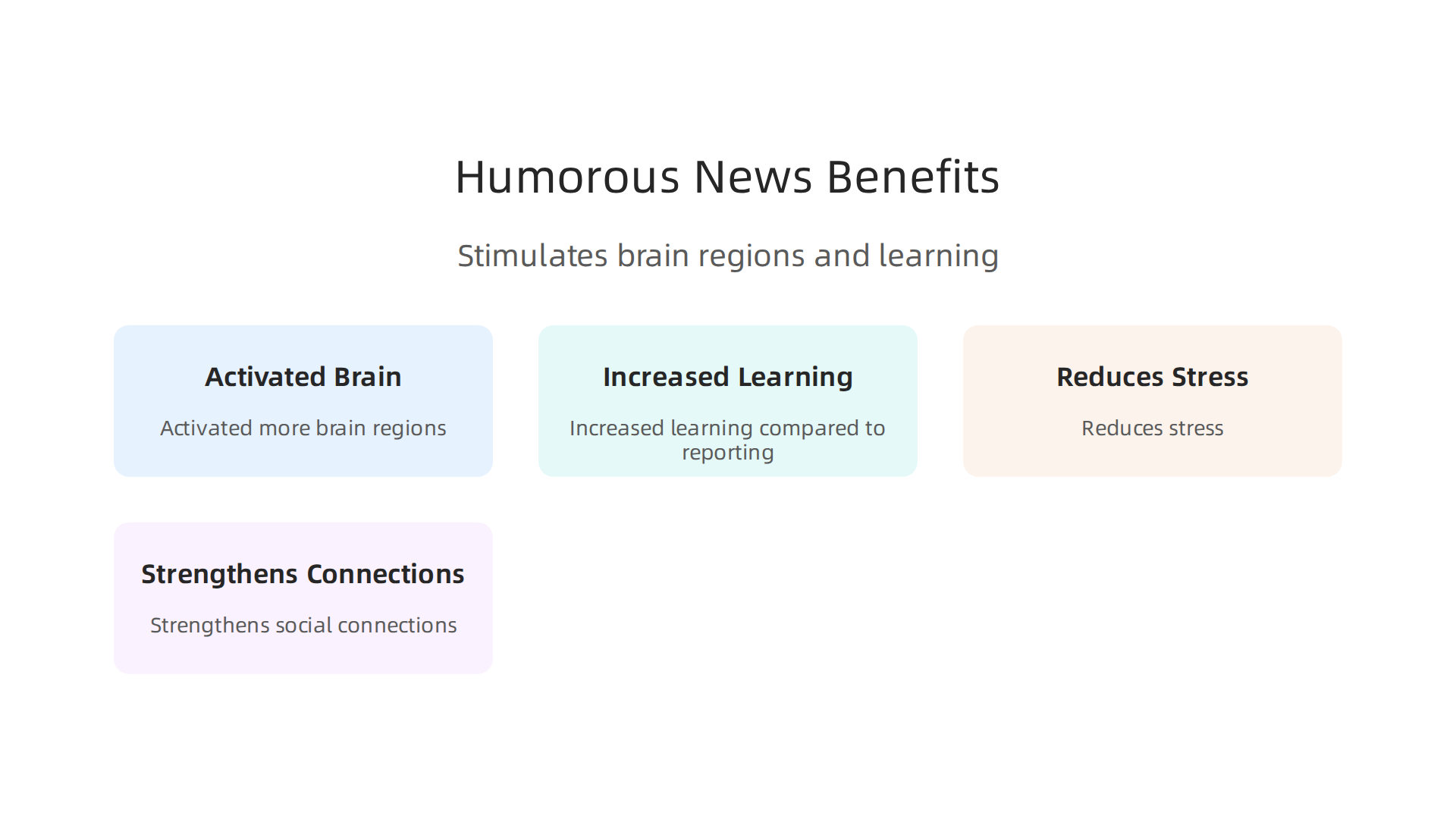
Turning your daily scan of valley news dispatch, ctv news, or ary news live into comedic analysis is also a powerful stress-relief tool. Research from the field of positive psychology confirms that humor reduces stress and strengthens social connections ^3. Instead of feeling drained by the news cycle, you can feel lighter.
We have talked before about how humorous news is the best antidote to news fatigue.

This guide takes that idea a step further. You will learn a repeatable method to spot the funny parts in regional reporting, analyze why they are funny, and share your findings with others.
Ready to laugh more and stress less?

Let us show you how the Ridiculous series approaches humor with meaning.

Sometimes the best punchlines come straight from the front page.
Why Valley News Dispatch Is a Goldmine for Comedy
You might not think of valley news dispatch as a comedy source. But think again. This local paper covers the kind of stories that almost write themselves.

Here is why regional reporting like this is perfect for finding laughs.
Low stakes, high absurdity. National news covers wars, elections, and economic crises. Heavy stuff. Local news? It covers a raccoon that broke into a bakery, a dispute over a lawn gnome, or a city council debate about parking meters that lasted three hours.

These stories matter to a small group of people. To everyone else, they are pure comedy. The stakes are low. The characters are real. And the outcomes are often ridiculous.
Predictable formats that comedians can twist. Police blotters, town council meeting recaps, and odd weather events follow a formula. That formula gives you a setup you can play with. A police blotter entry about someone calling 911 because their pizza was late is funny all by itself. But when you add a punchline or reframe it as a heroic saga? Even better. This structure is why shows like The Daily Show and Last Week Tonight thrive on local news clips. The format is ready for parody.
There is already an audience for this. Readers of valley news dispatch, ctv news, ary news live, and 1440 news often share the weirdest stories with friends. They know these reports are amusing. That means you do not have to convince people to find them funny. You just have to point out the humor that is already there.
In fact, research from the University of Pennsylvania shows that humor makes news more memorable and shareable ^1. When you turn a silly police blotter into a comedy bit, you are helping people remember the story and feel better about the news cycle.
So next time you scan valley news dispatch, look for the gold. The city council members arguing about the best way to trim a hedge. The lost pet that showed up at a gas station. These are not just stories. They are comedy gold waiting to be mined.
If you enjoy this kind of humor with meaning, check out the Ridiculous series. It is full of the same playful twist on everyday oddities.
The Psychology of Finding Humor in Regional News
So why do we laugh so hard at a story about a lost goat blocking traffic in a small town? It is not just because the goat is funny. There is real psychology behind why regional news like valley news dispatch makes us smile.
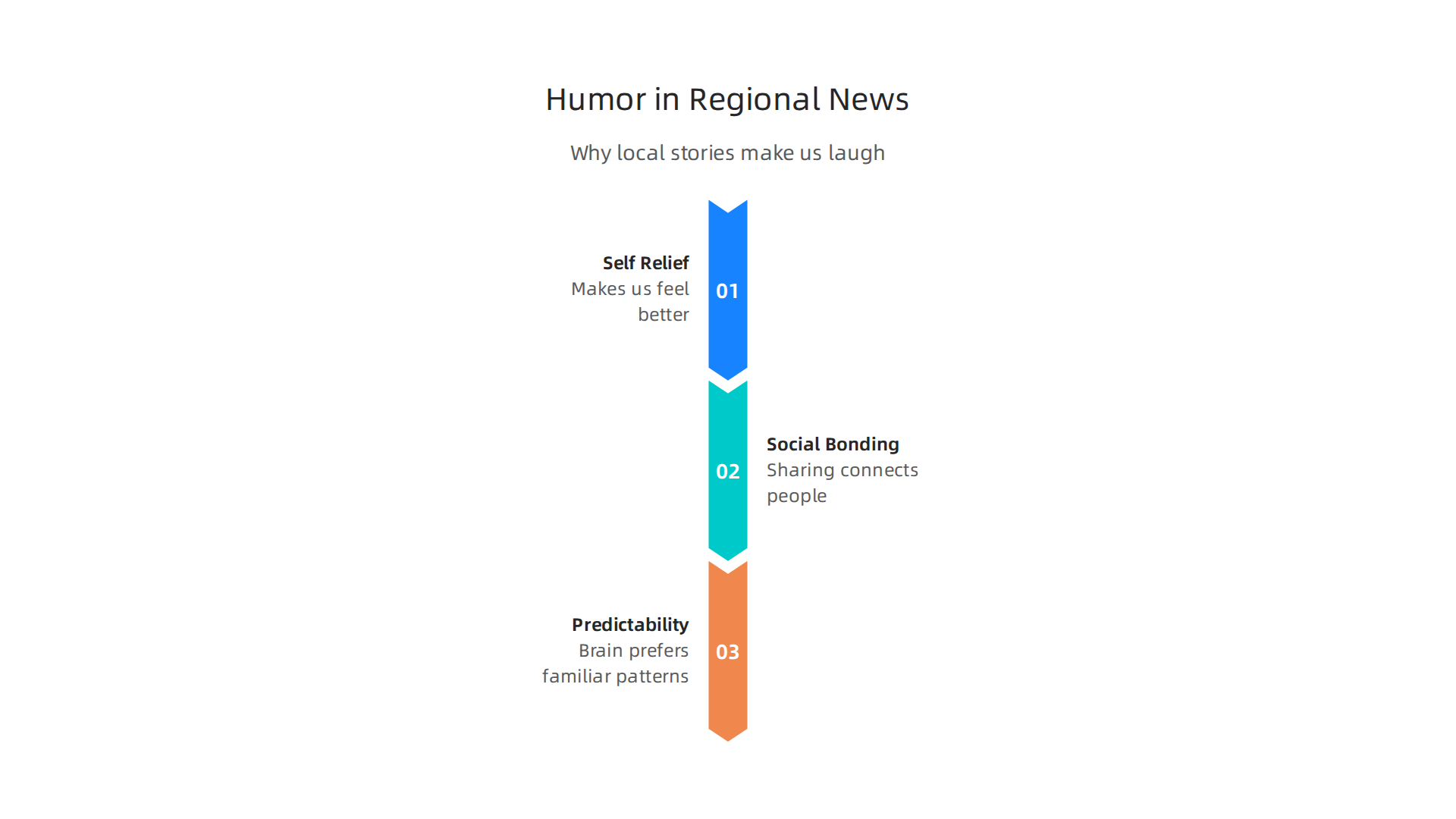
We feel better about our own lives. When you read about someone calling the police because their neighbor’s Christmas lights are too bright, your brain compares it to your own problems. Your messy kitchen does not seem so bad. That feeling of "at least I am not that person" gives you a small sense of relief. And relief feels good. According to the Mayo Clinic, laughter actually lowers stress hormones and triggers the release of feel-good chemicals ¹. Reading valley news dispatch gives you that small win, and your body thanks you.
Sharing funny news connects us. Have you ever sent a silly police blotter entry to a friend? That is your brain looking for social bonding. Studies show that shared laughter builds trust and strengthens relationships ². When you share a weird story from ctv news, ary news live, or 1440 news, you are not just passing along a laugh. You are saying, "I think this is funny, and I think you will too." That small act builds connection. And during stressful times, that connection matters a lot. Research from Michigan Today confirms that laughter decreases anxiety and depression while improving social ties ³.
Your brain loves the predictable pattern. Regional news follows a formula. Police blotters, city council meetings, lost pets. Your brain knows what to expect. That predictability lowers your guard. You can relax and enjoy the absurd twist without having to work hard. When a story from valley news dispatch starts with a normal heading like "Man Reports Missing Lawn Ornament," your brain settles in. Then the punchline arrives: the ornament was a pink flamingo, and it was found in a neighbor’s garage. The contrast between the boring setup and the silly payoff feels great. A review in the journal Advances in Physiology Education explains that humor reduces anxiety and increases participation, which is exactly what happens when you read these stories ⁴.
If you want more stories that give your brain that same relaxing laugh, check out The Ridiculous series. It is packed with the same playful twist on everyday oddities, but with a little more heart. Your stress levels will thank you.
Identifying the Funny: Key Tropes in Valley News Dispatch
Now that you understand why your brain loves these stories, let us look at the specific patterns that make valley news dispatch so entertaining.
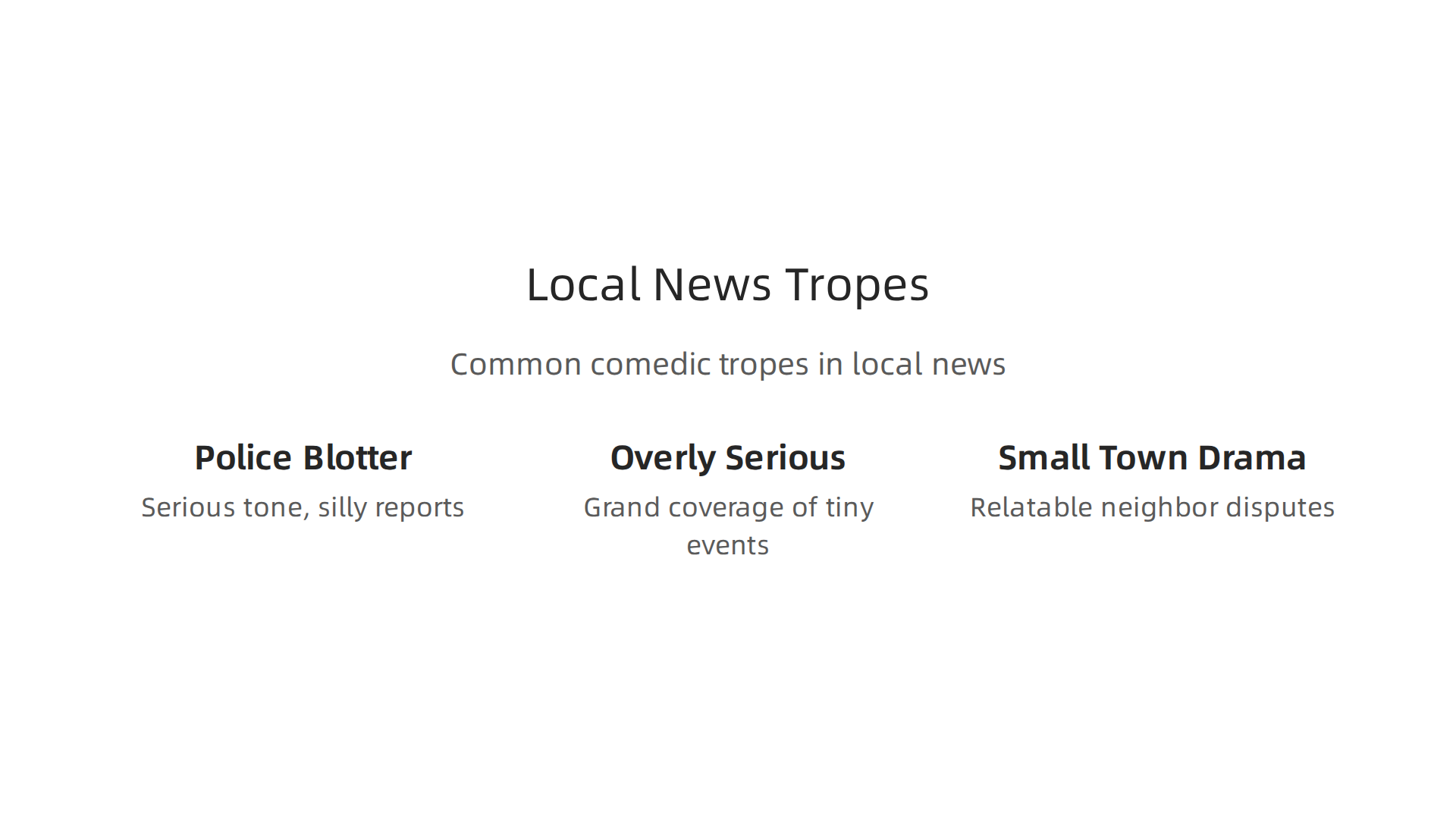
Once you know what to look for, you will spot the comedy everywhere.
The Police Blotter Goldmine
The police blotter is the crown jewel of funny local news. Officers write incident reports in a dead serious tone, no matter how silly the situation. That contrast is pure comedy.
You have seen these headlines before. "Woman Calls Police Because Neighbor’s Cat Called Her Names." "Man Arrested After Trying to Pay for Gas With Monopoly Money." The officers write it all down with the same straight face they would use for a serious crime. That mismatch between the formal language and the ridiculous situation is what makes you laugh.
Research from the University of Pennsylvania found that humor activates more brain regions than regular news and makes people more likely to share what they read ¹. That is why those blotter items go viral long before any political story does. Your brain wants to pass them along.
The Overly Serious Coverage of Trivial Events
Here is another trope you see all the time in valley news dispatch. A lost pet goat blocks traffic on Main Street. The news covers it with the same urgency as a major weather event. Reporters interview witnesses. They get quotes from the animal control officer. They maybe even show a live shot of the goat standing in the intersection.
Nothing dramatic happens. The goat just stands there. But the news team treats it like breaking news.
That gap between the effort of the coverage and the simplicity of the event creates natural irony. A 2021 study in the journal Communication Research showed that satirical news increases positive emotional responses compared to regular news reporting ². The same principle applies here. When a news outlet treats something small like something big, your brain registers the humor immediately.
Small Town Drama
You cannot talk about valley news dispatch without mentioning the feuding neighbors and heated town hall debates. These stories are full of character and conflict.
Think about it. One neighbor builds a fence two inches onto another neighbor’s property. The dispute lasts six months. It involves angry letters, zoning board meetings, and maybe even a lawn ornament theft. When you read about it in ary news live, you are not just getting the facts. You are getting a mini drama with real people acting exactly like people do.
And here is the secret. Stories that make you laugh are also the ones you remember longer. A study from ScienceDaily confirmed that humor stimulates brain regions tied to social engagement and improves memory ³. So when you laugh at the neighbor drama, your brain is encoding it more deeply than the dry news you scroll past.
Why These Tropes Work So Well
These patterns keep you coming back to 1440 news and similar outlets because they deliver a predictable payoff. You know the blotter will have something weird. You know the trivial event will be overcovered. You know the small town drama will deliver characters you recognize.
If you want more content that uses these same funny patterns with a creative twist, check out the Ridiculous series. It turns everyday absurdity into full stories that give your brain the same satisfying laugh.
For more on how finding humor in local news helps beat news fatigue, read our guide on why humorous news is the best antidote to news fatigue.
A Practical Framework for Comedic Analysis of Local News
Now you know the funny patterns. But how do you actually break down a valley news dispatch story to understand why it makes you laugh? Here is a repeatable 5-step method you can use on any piece of local news.

Start by scanning for absurdity. Look for the detail that does not fit. A police report that mentions a stolen inflatable Santa. A city council debate about whether to ban purple lawn flamingos. That mismatch between the serious format and the silly subject is your first clue.
Next, identify the "butt" of the joke. Comedy writers call this the target. In good valley news dispatch coverage, the target is never a vulnerable person. It is an idea, a situation, or sometimes our own human nature. A story about a man who called 911 because his neighbor’s cat was "staring at him" is funny because of the absurd overreaction, not because we are mocking the man himself.
Step three is to exaggerate the mundane. Take that ordinary detail and blow it up. If the news says "a goat blocked traffic," imagine the goat as a mastermind planning an escape. The headline from ctv news might be "Goat Holds Rush Hour Hostage." Exaggeration reveals the comedy hiding in plain sight. Jerry Seinfeld built his whole process around finding the funny in everyday life ⁴. You can do the same.
Step four is to add a relatable twist. Connect the weird event to something your reader has felt. That neighbor feud over a two-inch fence line? Everyone has dealt with a petty disagreement. When you say "this is the same energy as arguing over whose turn it is to take out the trash," the reader nods along.
Finally, punch up, not down. Good comedy always aims at power, institutions, or silly rules, not at individuals. A police blotter that laughs at the absurdity of the system is fine. One that laughs at someone’s misfortune is not. This keeps your analysis kind.
Walkthrough: A Real Valley News Dispatch Story
Let us run a real example through the framework. Imagine a valley news dispatch item: "Woman Calls Police After Finding a Wild Turkey in Her Bathtub."
Step one: Absurdity. A turkey in a bathtub. That image alone is ridiculous.
Step two: The butt. The joke is the turkey being out of place, plus the homeowner’s panic. We are not making fun of the woman. We are laughing at the unexpected situation.
Step three: Exaggerate the mundane. The turkey is not just a turkey. It is "a feathered intruder who helped itself to a bubble bath." The event becomes a mini drama.
Step four: Relatable twist. Who has not found something unexpected in their home? A raccoon in the trash, a squirrel in the attic. Everyone knows that "what is that noise?" feeling.
Step five: Punch up. The real joke here is that the police had to write an official report about a turkey. You are laughing at the system, not at the woman.
This method works with any story from 1440 news or your local paper. Try it next time you see a headline that makes you snort.
If you want more practice turning everyday absurdity into comedy, explore the Ridiculous series. It gives your brain the same satisfying laugh with a creative spin. And for more on why this kind of humor helps your memory, read our guide on why humorous news is the best antidote to news fatigue.
Tools and Techniques for Crafting Your Own Comedy from News
Now that you can spot the funny in a valley news dispatch, it is time to create some yourself. You do not need to be a professional comedian. You just need three simple tools.

These techniques come straight from how satirical writers turn headlines into gold. Use them on any story from ctv news, ary news live, or 1440 news, and watch the comedy appear.
Paraphrase with a Twist
Take the actual headline and rewrite it as if it were a sitcom plot. The twist replaces the serious framing with something playful. For example, a real valley news dispatch headline like "City Council Votes on New Parking Fees" becomes "City Council Debates Whether Your Wallet Should Cry in the Parking Lot." The structure stays the same, but the tone shifts.
This trick works because the reader already knows the basic story. You just give it a new lens. For more on writing satirical headlines that land, check out these tips for writing satirical news headlines by Julie Vick. She shows how to keep the truth but flip the frame.
Exaggeration: Ask "What If This Went Even More Wrong?"
Take the mundane detail and blow it up. A story about a lost dog becomes a citywide manhunt with helicopters and a ransom note. A minor traffic jam becomes "Car in Ditch Causes Three-Hour Standoff with Angry Squirrel."
Exaggeration works because it reveals the hidden drama in everyday life. When you read a ctv news story about a power outage, imagine it as a supervillain plot. The bigger you make the stakes, the funnier the contrast. This is the same approach Jerry Seinfeld used when he turned a lost button on a shirt into a full five-minute routine. You can apply it to any local news item.
Juxtaposition: Compare to a Famous Scene or Trope
Take your local story and put it next to something famous. That city council argument about a noise ordinance now becomes "This is the same energy as the ‘You can’t handle the truth’ scene, but about a leaf blower." The clash between the grand reference and the small reality creates instant comedy.
You do not need to be a movie buff. Use anything your reader knows. A neighbor dispute over a tree could be "Game of Thrones: Hedgerow Edition." A lost cat in a tree becomes "Mission: Impossible, but the target is a tabby."
This technique is easy and effective. It makes the reader feel clever for getting the reference.
Want to see these techniques in action across a whole collection of funny stories? Explore the Ridiculous series for book-length comedy built on the same principles. And if you need a laugh break right now, read about the most funny moments from Cincinnati Local 12 news. That article is packed with real examples of these tools at work.
Now go ahead. Grab a headline from your local paper. Paraphrase it. Exaggerate it. Juxtapose it. You have the tools. The funny is already there.
How to Share and Engage: Building a Community Around Funny News
You have a funny twist on a valley news dispatch in your hands. Now what? Sharing it the right way turns a one-off joke into an active, loyal audience. The best part: you do not need a huge following. You just need the right platforms and a few simple habits.
Pick the Right Platforms for Your Kind of Funny
Different platforms work best for different formats. For quick, daily hits, Twitter/X is still king.

A short, punchy rewrite of a ctv news or ary news live headline can spark retweets and replies in seconds. The key is to keep it short and tag the original source when possible. Pairing your joke with a catchy visual boosts shares even more, as explained in these tips on making local news go viral.
For video reactions, TikTok is your best bet. Young audiences especially love a fun, informal take on breaking news. The Reuters Institute found that publishers are learning to create and distribute news on TikTok with short, engaging clips. You can read their full report on how publishers are learning to create and distribute news on TikTok. Record yourself reacting to a 1440 news story and add your satirical spin. Keep it under 60 seconds.
For curated content, build a newsletter. A weekly roundup of your funniest headlines creates a personal connection with readers. They get the jokes straight to their inbox. This works especially well for a loyal core audience.
Encourage Your Audience to Join the Fun
The best communities are two-way streets. Invite your followers to submit their own funny takes on local news. Run a weekly "Funniest Headline of the Week" contest. Offer a shoutout or a simple prize. When people tag their local news sources like valley news dispatch or ctv news, the engagement can snowball.
You can also use interactive polls to keep the conversation going. Ask questions like "Which headline deserves a sitcom pilot?" or "Who said it: the mayor or a cartoon villain?" This approach helped News 12 build an interactive broadcast system with daily polls and QR codes, turning passive viewers into active participants. Check out their case study on interactive local news.
Another idea: ask readers to send you real headlines they find absurd. You can turn the best ones into a weekly segment. This makes your audience feel like part of the creative process.
Real Examples to Inspire You
Need proof this works? Take a look at how Funny Local News on YouTube built a channel by reacting to and commenting on pop culture and news. They built an entire community around shared laughter. You can check out their Funny Local News YouTube channel for inspiration.
And if you want to see a full collection of comedy built from real news, read about the funny moments from Cincinnati Local 12 news. That article shows exactly how sharing funny news can create a loyal, engaged audience.
Your Next Step
Now you have the tools and the sharing strategy. The only thing left is to start. Grab one of your funniest headlines, post it on your platform of choice, and invite your friends to join. Before long, you will have a community that loves laughing at the news together.
Ready to see how a whole book series turned this approach into a full comedy adventure? Visit Ridiculous and explore the world of book-length humor built on the same principles. It is the perfect next step for anyone who wants to turn funny news into something bigger.
Avoiding the Pitfalls: Ethical Humor and Sensitivity
Making people laugh is a great goal. But here is the truth you cannot ignore: comedy built on real news can cause real harm if you are not careful. The line between funny and cruel is thin. And once you cross it, your audience will notice.
Punch Up, Never Down
The golden rule of news satire is simple. Punch up at power, not down at people who are already struggling.

Never make fun of victims, tragedies, or marginalized groups. A joke about a politician’s bad decision? That is fair game. A joke about a family who lost their home in a flood? That is a problem.
This is the same principle that ethical journalists follow every day. The Society of Professional Journalists outlines a clear code of ethics to guide reporters through tough calls. You can explore the SPJ Code of Ethics for a deeper dive. The same logic applies to your humor. Good satire must carefully balance irony, hypocrisy, and truth while staying respectful, as this analysis of news satire explains.
Remember the Real People
When you read a valley news dispatch or a ctv news story, it is easy to treat the names like characters in a sitcom. But those names belong to real people. Avoid mocking individuals directly. Instead, aim your humor at the situation, the system, or the absurdity of the event itself.
Think about it this way. If the person in the headline read your joke, would they feel embarrassed or hurt? If the answer is yes, rewrite it. This rule applies whether you are reacting to an ary news live report or a quirky 1440 news feature. The goal is to make readers laugh with you, not at someone else’s expense.
When in Doubt, Ask Yourself One Question
Here is a simple test. Would this joke cause harm if the subject read it? If you hesitate for even a second, cut it. As one ethics expert put it, "Emotional truth" is not a cover for fabricating stories or hurting people. The Al Jazeera guide on ethical journalism makes this clear. Comedians who engage with the news should not ignore the rules of ethical journalism.
The same ethics panel discussions happening in 2026 remind us that the best humor comes from intelligence and awareness, not cruelty. Lessons from 2025’s ethics challenges show that audiences are quick to call out jokes that cross the line.
Keep the Joy, Lose the Harm
You do not have to choose between being funny and being kind. The best news comedy does both. It makes you think, makes you laugh, and leaves everyone feeling okay.
If you want more examples of funny news that stays on the right side of the line, check out these funny moments from Cincinnati Local 12 news. It shows exactly how to keep the humor without the harm.
And if you want comedy that balances wit with heart, explore the Ridiculous series. It is proof that you can be hilarious and thoughtful at the same time.
Summary
This article shows how everyday regional reporting—like items in Valley News Dispatch, CTV News, or 1440 News—can be mined for comedy that informs, connects, and reduces stress. It explains why local stories are especially funny (low stakes, predictable formats, vivid characters), offers the psychology behind that pleasure, and lists common tropes such as police blotters and over-serious coverage of trivial events. You get a practical five-step analysis method to identify the absurdity, pick the joke’s target, exaggerate, add a relatable twist, and keep humor ethical. The piece also gives writing techniques (paraphrase, exaggeration, juxtaposition), sharing strategies by platform, and guidance on building community without harming subjects. By the end you’ll know how to spot comic gold, craft shareable bits, and avoid common ethical pitfalls so your local-news humor lands with kindness and impact.