Introduction
If you are a parent of a toddler or preschooler, you have probably heard of Blippi. The energetic man in the blue and orange outfit appears in thousands of popular videos that kids love to watch over and over. But here is the real question many moms and dads ask: are blippi videos actually good for my child?
As of 2026, the main Blippi channel has over 27 million subscribers and more than 23 billion total views according to Social Blade. That is a massive number. With so many kids glued to these clips, it makes sense to wonder what they are actually learning.
This guide gives you evidence-based answers. We look at age suitability, real learning outcomes, and expert screen time tips. Our goal is simple. We want to help you decide whether Blippi works for your family without the hype or the guilt.
The truth is that not all screen time is the same. Some content helps kids learn colors, numbers, and how the world works. Other content is just noise. And with so much vertical video on youtube competing for attention, it is smart to know what you are letting your child watch.
That is why we put this guide together. We pulled research on child development, compared clifford videos and other popular shows, and looked at how Blippi fits into a balanced day. You will get honest answers, not marketing.
And hey, parenting is hard. Sometimes you need a laugh too. If you want more good humor in your day, check out a book series made for readers who like funny and thoughtful. Because everyone deserves a little joy.
Let us dive into what Blippi actually teaches and whether it is worth the screen time.
What Is Blippi and Why Do Kids Love It?
If your toddler has ever shouted "Blippi!" from the other room, you already know the answer. Blippi is the character in the blue and orange suspenders who runs around exploring the world with endless energy. The channel started with Stevin John, who created the character in 2014. Later, a second actor joined to play Blippi in some videos, so the show keeps growing even today.
The format is simple but effective. Blippi visits real places like fire stations, farms, museums, and playgrounds. He points at things, asks questions, and sings silly songs about tractors, excavators, and colors. Each video teaches basic concepts like counting, shapes, and how things work. The pace is fast. The camera moves a lot. And Blippi talks directly to the camera, so kids feel like he is talking to them.
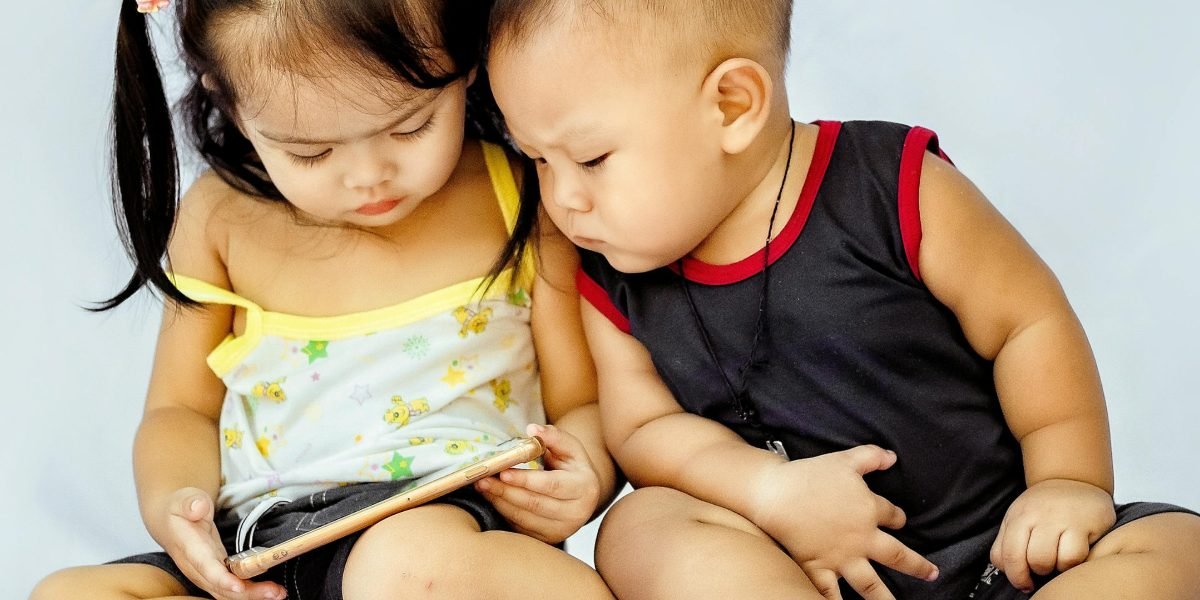
So why do kids love it so much? It comes down to three things.
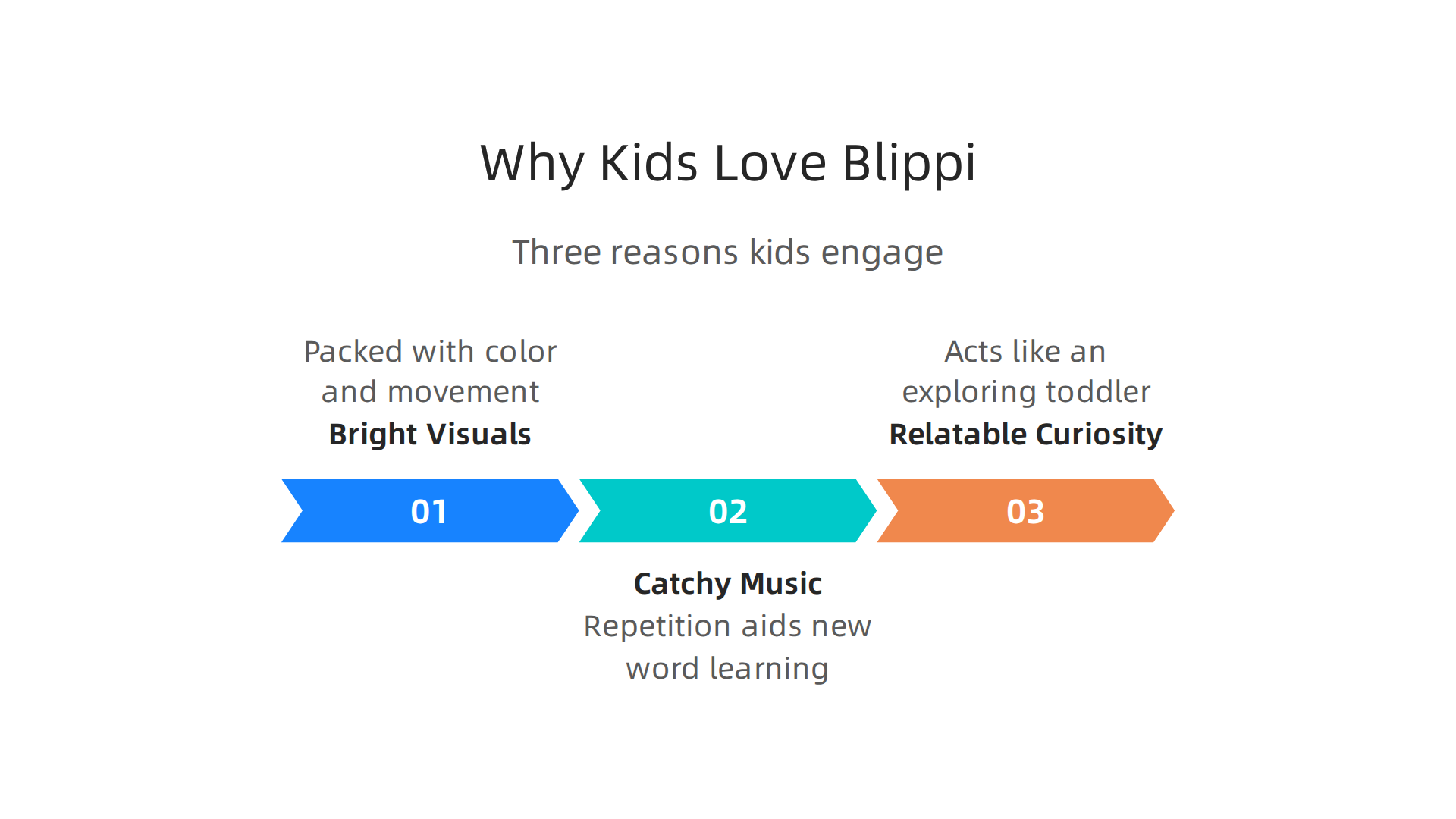
Bright, busy visuals. Every frame is packed with color and movement. Young children are drawn to high contrast and fast changes. Blippi’s outfit alone is designed to grab attention.
Catchy music. The songs get stuck in your head. But more importantly, they get stuck in your child’s head. Repetition helps toddlers learn new words and concepts. When Blippi sings about a garbage truck, your child remembers what it does.
Relatable curiosity. Blippi acts like a kid. He gets excited about ice cream, bubbles, and big trucks. He asks "Why?" over and over. That is exactly what toddlers do. They see someone their own emotional age exploring the world, and they want to join in.
The numbers back this up. As of 2026, the main Blippi channel has over 27 million subscribers and more than 23 billion total views, according to Social Blade. Other channels like Blippi Learns and Blippi Playtime add millions more views. YouTube remains the most-used platform for young kids, with 67 percent of U.S. children ages 2 to 5 watching regularly. So Blippi is not just popular. He is part of a huge shift in how kids watch content.
Understanding why kids love Blippi helps you see what they are actually getting from those blippi videos. It is not just noise. It is a character that speaks their language. Want to dig deeper into how Blippi compares to other popular videos and whether it is truly educational? Check out our honest guide to Blippi and screen time.
Educational Value: What Blippi Teaches Children
So, what exactly does your child learn from watching Blippi videos? The answer is a lot more than you might think. Blippi covers a wide range of topics through real-world exploration. He teaches colors, numbers, shapes, animals, and all kinds of vehicles. But he does not just name things. He takes kids to actual places like fire stations, chocolate factories, and farms. That real-world experience makes the learning stick.
One clinical psychologist explains that the program can be helpful in moderation because it introduces young children to numbers, colors, shapes, and everyday environments in a way that makes sense to them. You can read the full expert take on PureWow. This kind of hands-on showing rather than just telling is a big reason these are some of the most popular videos on YouTube.
Here is a quick look at what Blippi actually teaches:
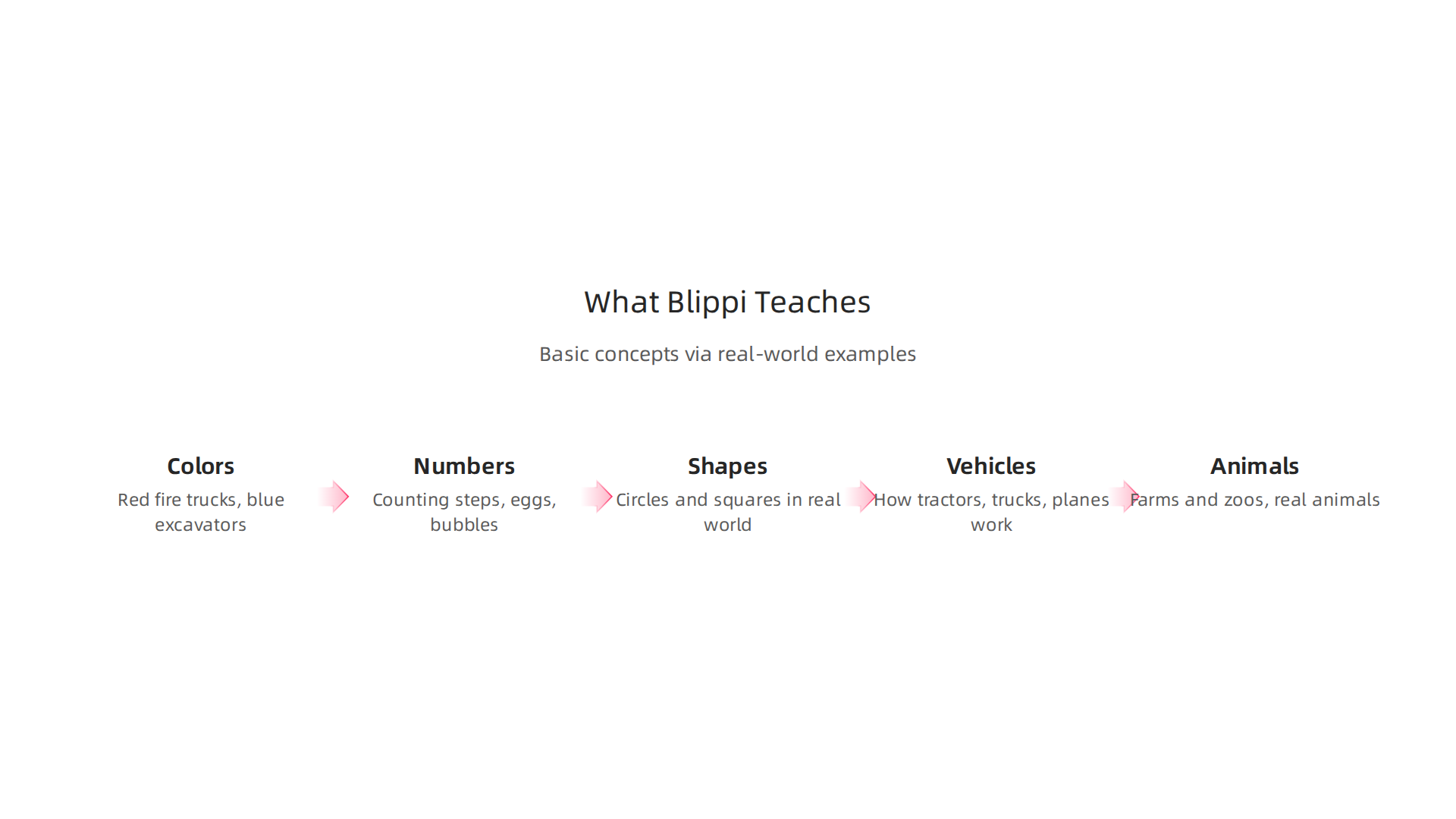
| Topic | Example |
|---|---|
| Colors | Pointing at red fire trucks and blue excavators |
| Numbers | Counting steps, eggs, or bubbles |
| Shapes | Spotting circles and squares in the real world |
| Vehicles | Learning how tractors, garbage trucks, and airplanes work |
| Animals | Visiting farms and zoos to see and hear real animals |
Repetition is the secret. Research on children’s media shows that interactive and repetitive formats aid learning. Blippi repeats the same concepts across many videos. Kids hear the song about an excavator over and over. That repetition builds memory and vocabulary.
Expert opinions vary on the depth of the educational benefit. Many acknowledge that Blippi plays a clear role in vocabulary building. Kids learn words like "conveyor belt," "bulldozer," and "helicopter" because they see these things in action. As one parent guide notes, Blippi provides a positive learning environment and introduces kids to various real-world topics. You can read the full overview at Safes.
The numbers prove the reach. As of 2026, the main Blippi channel has over 27 million subscribers and more than 23 billion views, according to Social Blade. That is a massive audience. And the Blippi Playtime channel alone has over 15 million subscribers, per SocialCounts. That kind of viewership means millions of kids are learning from these videos every single day.
Of course, the format is not like a classroom lesson. The pace is fast and the visuals are busy. But for toddlers and preschoolers, that fast pace matches how they pay attention. It is learning disguised as play.
Watching with your child and talking about what you see can make the learning even stronger. And if you ever need a break from the fire truck song, make sure your internet is fast enough to stream those blippi videos without buffering. Check out these funny wifi disasters to see how important a good connection really is.
Recommended Age Range: Is Blippi Right for Your Child?
You might be wondering exactly which age Blippi is made for. The short answer? Kids ages 2 to 5. That is the sweet spot.
Blippi videos are designed with toddlers and preschoolers in mind. The fast pacing matches how young children pay attention. The repetition helps them remember new words. And the language level is simple enough for early learners to follow along.
But here is the thing. Some older kids, even up to age 7 or 8, still enjoy the popular videos too. They might find the silly songs fun or the real-world visits interesting. And some 1-year-olds get pulled in by the bright colors and energetic host. Every child is different.
Here are the key developmental factors to consider:
- Attention span. Blippi episodes move quickly. For a 2-year-old, that speed can be perfect. For a more sensitive child, it might feel overwhelming. Watch one episode together and see how they react.
- Repetition tolerance. Blippi repeats concepts a lot. Most toddlers love this. It builds memory. But some older kids might find it boring. If your 6-year-old rolls their eyes at the excavator song, they are probably ready for other content.
- Language level. The vocabulary is basic. Words like "big," "red," and "truck." This works great for early talkers. If your child is already speaking in full sentences, they may need more advanced material.
Screen time guidelines matter too. The American Academy of Pediatrics has shifted its recommendations. As of 2026, the AAP no longer gives a strict number of minutes for all children. Instead, they focus on quality of content and family needs. You can read the full policy statement from EdSurge. For kids ages 2 to 5, the older guideline from the American Academy of Child and Adolescent Psychiatry suggests limiting non-educational screen time to about 1 hour per weekday. That is a helpful starting point.
A study from 2026 found that 71.5% of toddlers watched YouTube or YouTube Kids. You can read the research in Infant and Child Development. So your child is not alone. The key is choosing the right content for their age and temperament.
**How to know if Blippi is right for your child:
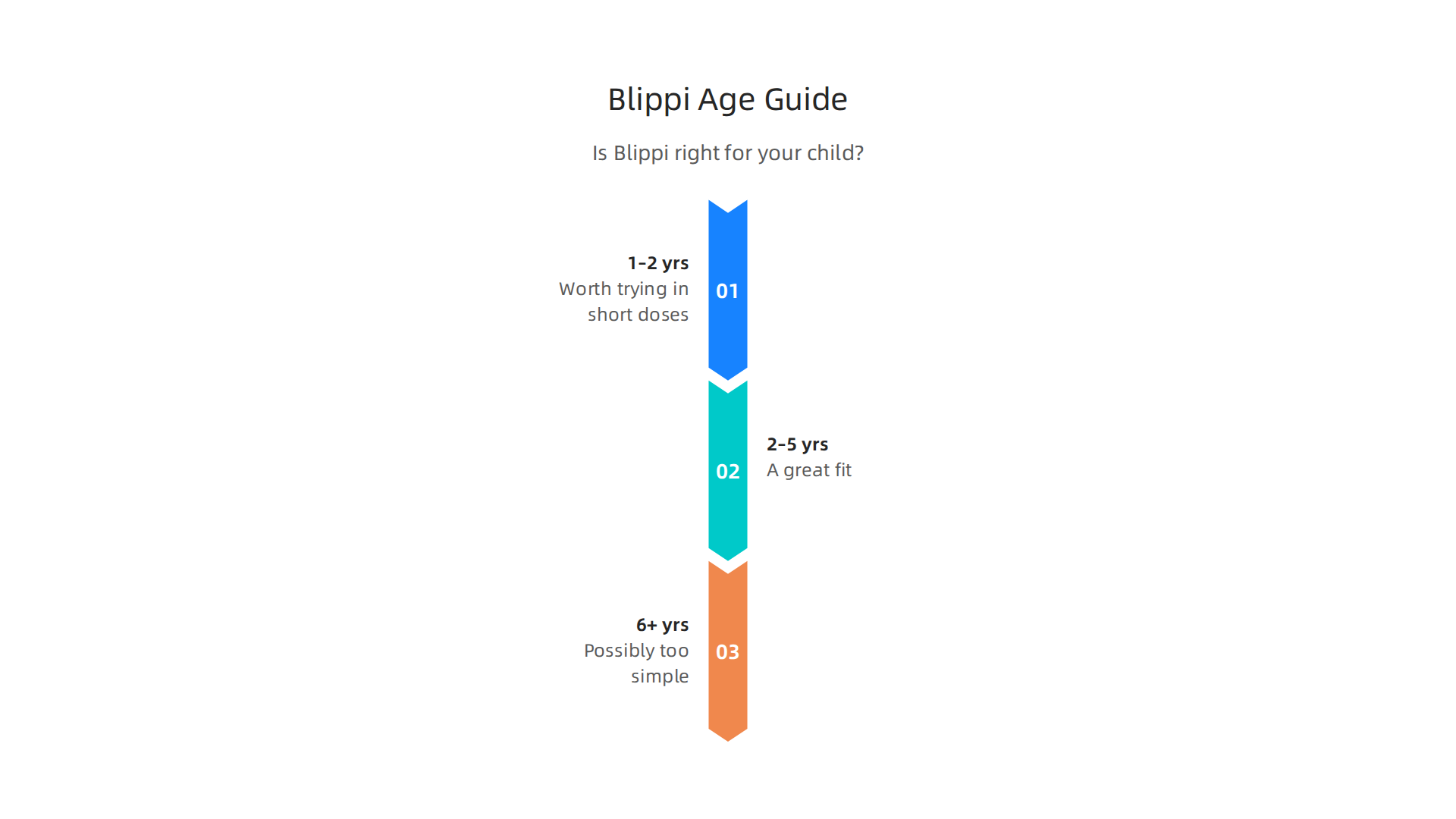
**
| If your child is… | Blippi is probably… |
|---|---|
| 1 to 2 years old | Worth trying in short doses |
| 2 to 5 years old | A great fit |
| 6 or older | Possibly too simple |
Every child develops differently. Trust your gut. If you watch a few blippi videos and your kid is learning words and smiling, you are on the right track. If they seem bored or overstimulated, try something else.
The same goes for other shows like Clifford videos or SML videos. What works for one child may not work for another. And if you are watching with your child, you can make the experience even better. Talk about what you see. Ask questions. Laugh together.
For a little extra humor during those long screen time sessions, you might enjoy some of the funny news articles on our site. Check out this collection of funny news headlines for a quick mood boost. It is the perfect break when you need one.
Screen Time and Parenting: Setting Healthy Boundaries
So your child loves Blippi videos. Now what? The real question isn’t just "Is this show good?" It’s "How do I keep screen time healthy?"
Let’s look at what experts say in 2026.
What the Experts Actually Recommend
The American Academy of Pediatrics (AAP) changed its stance in 2026. Instead of a strict minute limit for all kids, they now focus on family needs and content quality. You can see the full policy statement from EdSurge. The key idea? No single number works for every child. But for kids ages 2 to 5, a good rule of thumb is to limit non-educational screen time to about 1 hour per weekday. The American Academy of Child and Adolescent Psychiatry still stands by that guideline.
For older kids, the focus shifts to building healthy habits. The AAP’s new digital media guidelines emphasize setting time boundaries that fit your family’s schedule.
Why Watching Together Matters
Here is the simplest way to make screen time better: watch with your child.
Co-viewing turns a solo activity into a shared learning moment.
When you sit next to your kid and talk about what’s happening on screen, they learn more. You can point out the colors. Ask what sound a tractor makes. Laugh together at the silly songs.
Research shows that more than half of parents in the U.S. already co-view YouTube with their kids, according to a Toy Association report. That is a great habit to keep.
Practical Strategies to Set Boundaries
You do not need to be a tech expert to manage screen time. Try these simple ideas:
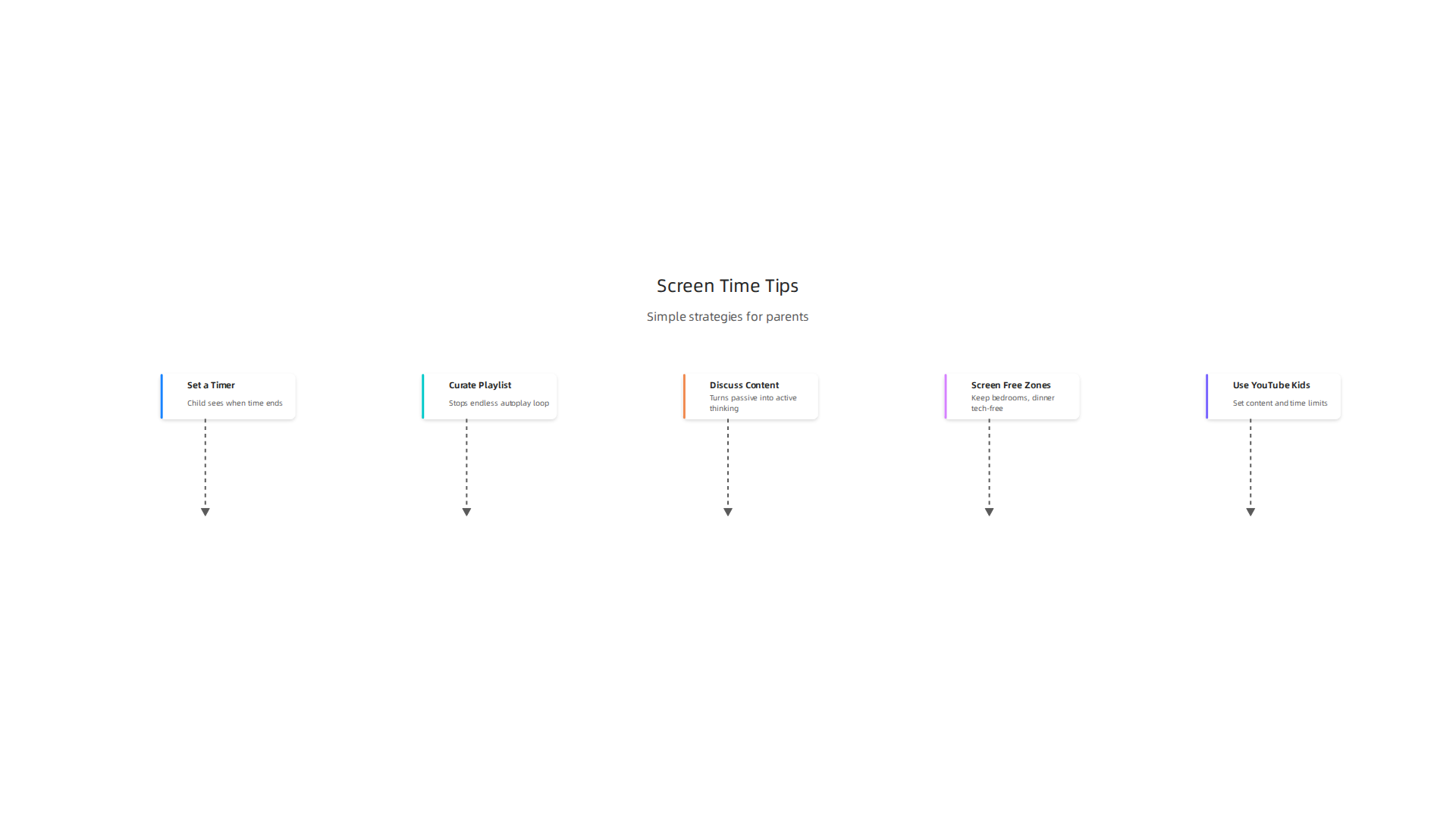
- Set a timer. Use a visual timer so your child can see when Blippi time ends. Many kids respond better to a countdown than a surprise cutoff.
- Curate a playlist. Pre-select a few Blippi videos or other popular videos like Clifford videos before handing over the device. This stops the endless autoplay loop.
- Discuss afterward. Ask your child what they learned. "What was your favorite part?" This turns passive watching into active thinking.
- Create screen-free zones. Keep bedrooms and the dinner table tech-free. This helps kids (and you) disconnect.
- Use YouTube Kids. The app lets you set content limits and time limits. Check out the YouTube Kids parent resources for setup help.
What About SML Videos and Vertical Video on YouTube?
Some kids also enjoy SML videos or vertical video on YouTube. These can be more chaotic. Always preview unfamiliar content. The same boundary rules apply: keep it short, watch together, and talk about it.
For more help navigating kids’ screen time, check out our complete guide to Blippi and screen time. It covers everything from content quality to safety tips.
Alternatives to Blippi: Other Educational YouTube Channels
Your child might love Blippi videos. And that is fine. But variety matters. Watching the same channel over and over can get stale. Plus, different shows teach different skills. Let me walk you through some great alternatives.
Why Look Beyond Blippi
Blippi is amazing for teaching kids about colors, shapes, and machines. But no single channel does everything. Mixing up your child’s media diet helps them learn new things. It also keeps screen time fresh and exciting. Many parents look for other options to balance things out. And in 2026, there are plenty of excellent choices.
Top Alternatives to Try
Here are a few channels that parents and experts recommend. You can find full lists on iD Tech and Care.com.
- Ms. Rachel – She uses real speech therapy techniques. Her slow, clear talking helps toddlers learn words and sounds. If your child is just starting to talk, this is a wonderful pick.
- Super Simple Songs – These are gentle, catchy songs. They teach basic concepts like counting, the alphabet, and daily routines. The animation is simple and calm.
- Sesame Street – A classic for a reason. Their YouTube channel has short clips on emotions, numbers, and friendship. The mix of puppets and real kids is engaging.
- PBS Kids – Shows like Daniel Tiger and Arthur are available. They focus on social skills and emotional learning. Great for kids ages 3 to 7.
- Clifford videos – The big red dog. Clifford videos teach kindness and problem solving. They are slower paced and story based.
- The DadLab – This channel is full of simple science experiments you can do at home. It is perfect for curious kids who love to ask "why?"
How to Pick What Works for Your Child
Think about what your child needs right now. Do they need help with speech? Try Ms. Rachel. Do they get anxious? Sesame Street or Clifford videos can help. Do they love music? Super Simple Songs is a safe bet.
You do not have to drop Blippi completely. Rotate between a few channels. That way your child gets a mix of learning styles.
A Quick Comparison
| Channel | Best For | Age Range |
|---|---|---|
| Ms. Rachel | Speech development | 1–3 years |
| Super Simple Songs | Songs and routines | 1–4 years |
| Sesame Street | Social skills | 2–5 years |
| Clifford videos | Kindness and stories | 3–6 years |
| The DadLab | Science and experiments | 4–8 years |
What About SML Videos or Vertical Video on YouTube?
Be careful with SML videos. They are popular but can be chaotic and less educational. Always preview before letting your child watch. And vertical video on YouTube is common now, but it is often shorter and more distracting. Stick to channels you trust.
For more help choosing the right content, check out our full guide on whether Blippi is good for kids. It covers how to build a balanced screen time routine that fits your family.
Expert Tips for Maximizing Learning from Blippi Videos
So you have found a few Blippi videos your child enjoys. Or maybe you want to stick with Blippi but make the time count more. Here is the truth: how you use these videos matters just as much as which ones you pick. A little planning can turn passive watching into a real learning moment.
Tip 1: Watch Together and Talk About It
The easiest way to boost learning is to watch with your child. Ask simple questions like "What color is that truck?" or "Can you say ‘excavator’?" When Blippi says a new word, pause and say it again together. Repetition helps toddlers remember.
A clinical psychologist told PureWow that Blippi is helpful in moderation because it introduces numbers, colors, shapes, and everyday environments in a fun way. That is good news. But the real magic happens when you repeat those words during the day. Point to a red cup and say "red" just like Blippi does. Your child starts connecting the video to real life.
Tip 2: Turn Episodes Into Real World Adventures
Blippi visits places like fire stations, museums, and farms. After watching one of those popular videos, plan a simple outing. Go to a local fire station or a petting zoo. Ask your child what Blippi did there. Let them point out things they saw in the episode.
This kind of hands on learning sticks way longer than just screen time. You are building a bridge between the video and the world outside. It also turns screen time into a conversation starter instead of a babysitter.
Tip 3: Set Time Boundaries and Avoid Binge Watching
In 2026, the American Academy of Pediatrics updated its screen time guidelines. Instead of a strict number of minutes, they now focus on quality and family context. The new AAP recommendations say "set time boundaries" based on your child’s needs and your family’s schedule. This means you decide what works for your home.
Still, experts suggest keeping non-educational screen time to about one hour per weekday for children 2 to 5. Even educational shows can lose their value if they run back to back. Your child’s brain needs breaks to process new information.
After each Blippi video, turn it off and talk about what you just watched. Ask "What was your favorite part?" or "What did Blippi learn today?" This simple habit turns a passive experience into an active conversation.
For a deeper look at how to build a balanced screen time routine, check out our full guide on whether Blippi is a good fit for your child. It covers exactly how to blend these tips into your daily life.
Common Concerns: Is Blippi Too Hyper or Commercial?
Let’s be honest. You have probably heard other parents say it. "Blippi is way too hyper." Or "He is just a walking advertisement for toys."
These are totally fair concerns. And you should not ignore them. As a parent, you want to know what your child is watching and how it affects them. So let’s look at each worry one by one.
The "Too Hyper" Worry
Yes, Blippi moves fast. He jumps around, speaks loudly, and changes subjects quickly. For some kids, that energy is exciting. For others, it might feel overwhelming.
Here is what the numbers tell us. As of May 2026, the main Blippi channel has over 27 million subscribers and has racked up more than 23 billion views, according to Social Blade. That is a lot of families choosing to put on those blippi videos. So clearly, many toddlers find the pace fun instead of stressful.
But your child is unique. In 2026, the American Academy of Pediatrics released new screen time guidelines that focus less on a hard limit and more on quality and family context. The policy now says to "set time boundaries" based on your child’s needs. So if you notice your little one seems wound up after watching, you can dial it back. Or try a calmer show like Ms. Rachel or Sesame Street. The AAP’s updated recommendations can help you decide what fits your home.
The "Too Commercial" Worry
You cannot miss the Blippi merchandise. It is everywhere. Toys, clothes, backpacks, books. The channel is a huge business with heavy licensing.
That bothers some parents. And it is smart to be aware of it. But here is the thing: the videos themselves are not constant commercials. Blippi does not stop and say "buy my toy excavator." He teaches colors, shapes, and how things work. The commercial side lives mostly in stores and online shopping.
If you choose not to buy Blippi toys, that is fine. The videos still offer educational value without you spending a dime. You can treat the show as pure entertainment and skip the merchandise.
Repetitive and Shallow?
Critics say Blippi repeats the same words and concepts over and over. And they are right. But for toddlers, repetition is how they learn. Hearing "excavator" ten times in one video helps a two-year-old remember the word. That is not shallow. That is developmentally smart.
Yes, you might get bored. But your child is not looking for deep storytelling. They are looking for bright colors, simple words, and a friendly guide. Many parenting sites, including Care.com, list Blippi as one of the top educational YouTube channels for kids because it holds attention and teaches basic concepts.
Your Call
No show is perfect. Blippi has its flaws. But knowing them helps you use it wisely. Watch with your child. Set time boundaries. Skip the merchandise if you want. And if the energy feels too high for your child, try shorter clips or different content.
If you want a deeper look at whether Blippi is a good fit for your family, check out our full guide on Blippi for kids. It covers how to balance screen time and keep learning fun.
Summary
This article examines whether Blippi videos are good for toddlers and preschoolers by reviewing what the show teaches, who it fits best, and how parents can use it wisely. It explains Blippi’s format—bright visuals, catchy songs, and real-world visits—and summarizes the konkret learning gains like colors, numbers, shapes, and vocabulary that repetition supports. The guide walks through recommended age ranges (best for about 2–5 years), discusses updated expert screen-time guidance, and offers practical parenting strategies such as co-viewing, setting timers, and curating playlists. It also addresses common worries about hyperactivity, commercialization, and overstimulation, and suggests calmer alternatives when needed. Finally, the article gives tips to turn episodes into real-world learning moments and technical ideas to avoid buffering so screen time stays productive. After reading, parents will be able to assess if Blippi fits their child, set healthier boundaries, and choose complementary channels to broaden learning.